
ERP
Exposure and Response Prevention (ERP) is a highly effective, evidence-based treatment for anxiety and OCD. It involves gradually facing the thoughts, situations, or sensations that trigger anxiety while learning to respond differently—without relying on avoidance, reassurance, or rituals. Over time, this helps your brain learn that anxiety is manageable and doesn’t need to control your actions.
What is Exposure and Response Prevention?
This depends on your specific concerns, but it may include approaching avoided situations, allowing anxious thoughts to be present without trying to “fix” them, and reducing habits like checking, reassurance-seeking, or overthinking. We’ll tailor everything to your goals and daily life. Most importantly, you are the driver and I’m the GPS.
What kinds of things will I practice in ERP?
Will I be forced to face my biggest fears right away?
Absolutely not. ERP is done gradually and collaboratively. You are always in control of the pace. We start with manageable steps and build up over time. You’ll never be pushed into something you’re not prepared for. Our goal is steady, meaningful progress; not overwhelm.
ERP works by helping your brain form new learning. Instead of reinforcing fear and avoidance, you build confidence in your ability to handle anxiety and uncertainty. Over time, this leads to less reactivity, more flexibility, and greater freedom to engage in your life—even when anxiety shows up.
Is ERP a long term solution?
Anxiety and OCD involve an overactive threat response in a primitive part of the brain, called the amygdala. The amygdala doesn’t know the difference between real and imagined danger and sends signals to the rest of your body that you are not safe. When you perform a compulsion, avoid situations, or ask for accommodations from others, it reinforces the cycle and teaches your brain to alert you again to this trigger.
ERP helps retrain the amygdala by allowing the threat response to go off without responding in the usual ways. Over time, your brain learns that the situation isn’t actually dangerous and the alarm response begins to quiet down.
The biology of anxiety and OCD
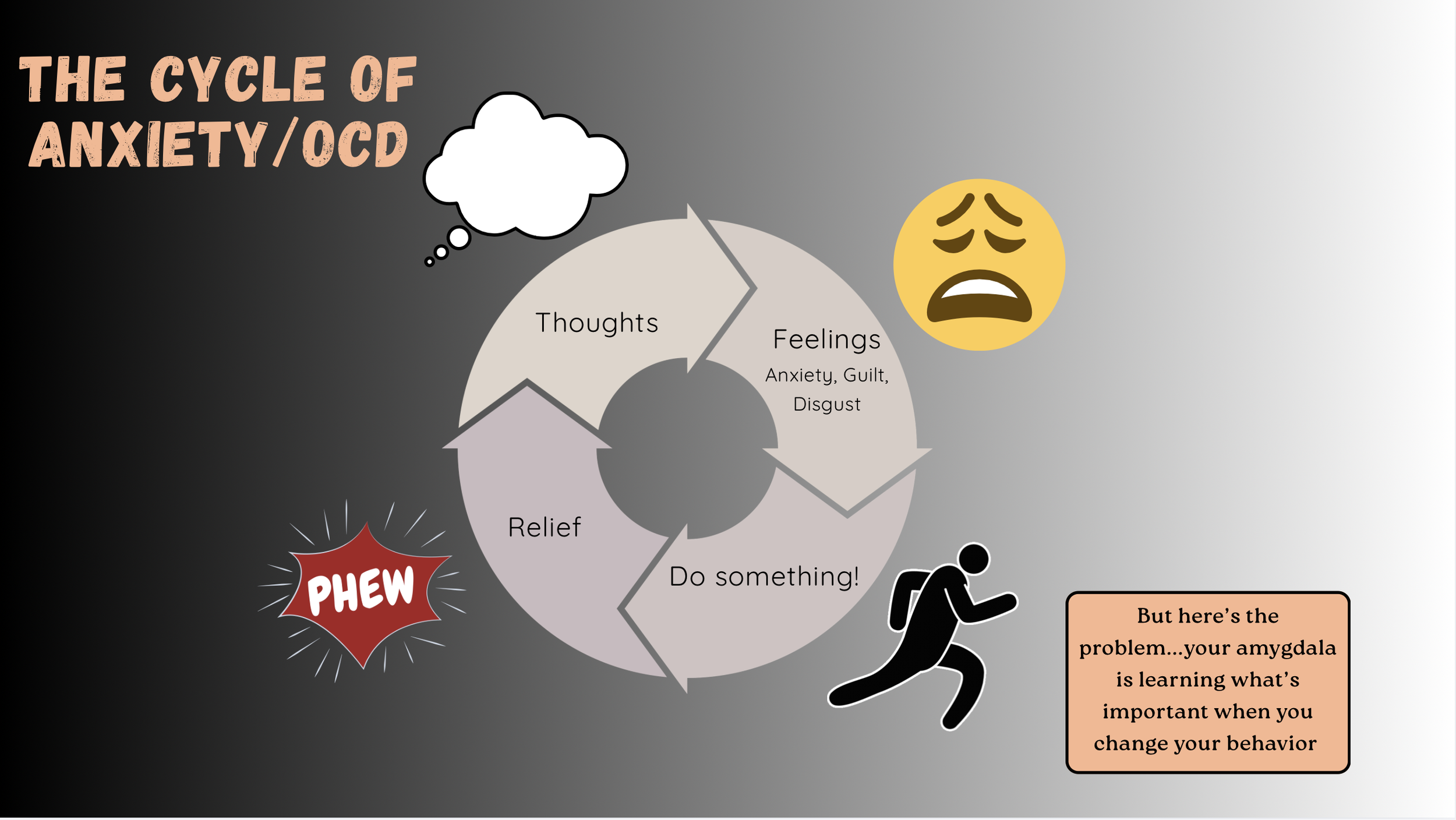
How avoidance and compulsions actually make anxiety worse in the long run
Avoidance and short-term relief strategies teach the brain that anxiety is dangerous and must be escaped, which keeps the cycle going. ERP helps your brain learn a different pattern—one where anxiety can rise and fall on its own without needing to be controlled.